A gameplay walkthrough showcasing player navigation, environmental guidance, and spatial progression through the temple.
Overview
Concept:
Shandora is an exploration-driven level set within ancient ruins reclaimed by nature. The level focuses on guiding the player through a layered environment using spatial design, lighting, and environmental cues.
Player Experience:
The player navigates through overgrown temple structures, uncovering pathways and progressing deeper into the ruins while maintaining a sense of discovery and direction.
Core Loop:
Explore → Navigate → Discover Path → Progress
>>>>>>>>>>>>>>>>>>>>>>>>>>>>>>>>>>>>>>>>>>>>>>>>>>>>>>>>>>>>>>>>>>>>>>>>>>>>>
Design Focus
> Player navigation through environmental guidance
> Use of lighting and landmarks to direct movement
> Layered level design with vertical and horizontal exploration
> Creating a balance between openness and direction
>>>>>>>>>>>>>>>>>>>>>>>>>>>>>>>>>>>>>>>>>>>>>>>>>>>>>>>>>>>>>>>>>>>>>>>>>>>>>
Level Layout & Player Flow
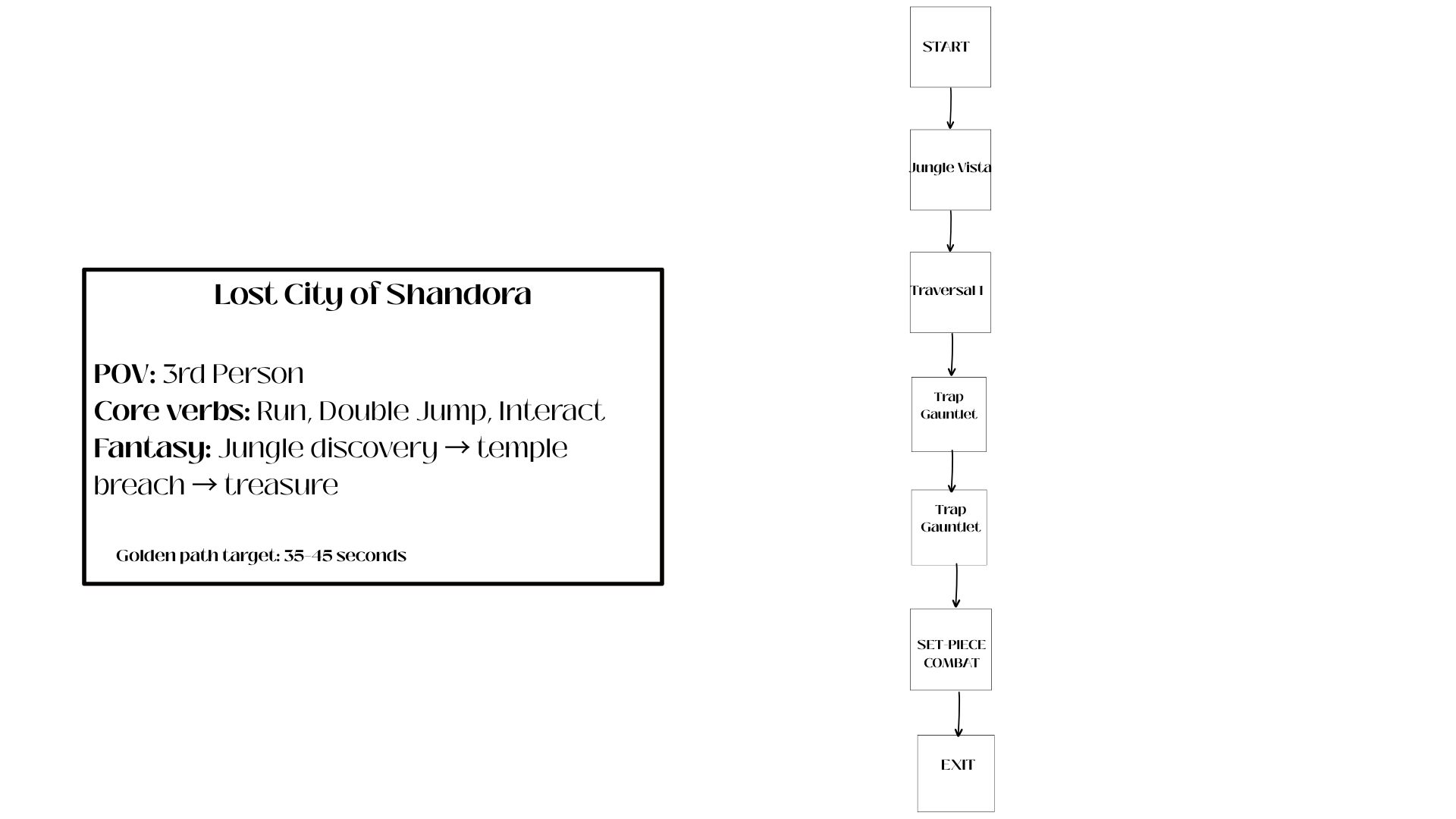
The level is structured to lead the player through a sequence of interconnected spaces:
> Entry Area: Introduces the environment with clear visual landmarks
> Mid Section: Expands into more open exploration with multiple pathways
> Inner Temple: Narrows into more controlled navigation spaces
> Final Area: Focused progression toward a key point of interest
Environmental elements such as lighting, structure placement, and natural overgrowth are used to subtly guide the player forward.
>>>>>>>>>>>>>>>>>>>>>>>>>>>>>>>>>>>>>>>>>>>>>>>>>>>>>>>>>>>>>>>>>>>>>>>>>>>>>
Player Path & Navigation
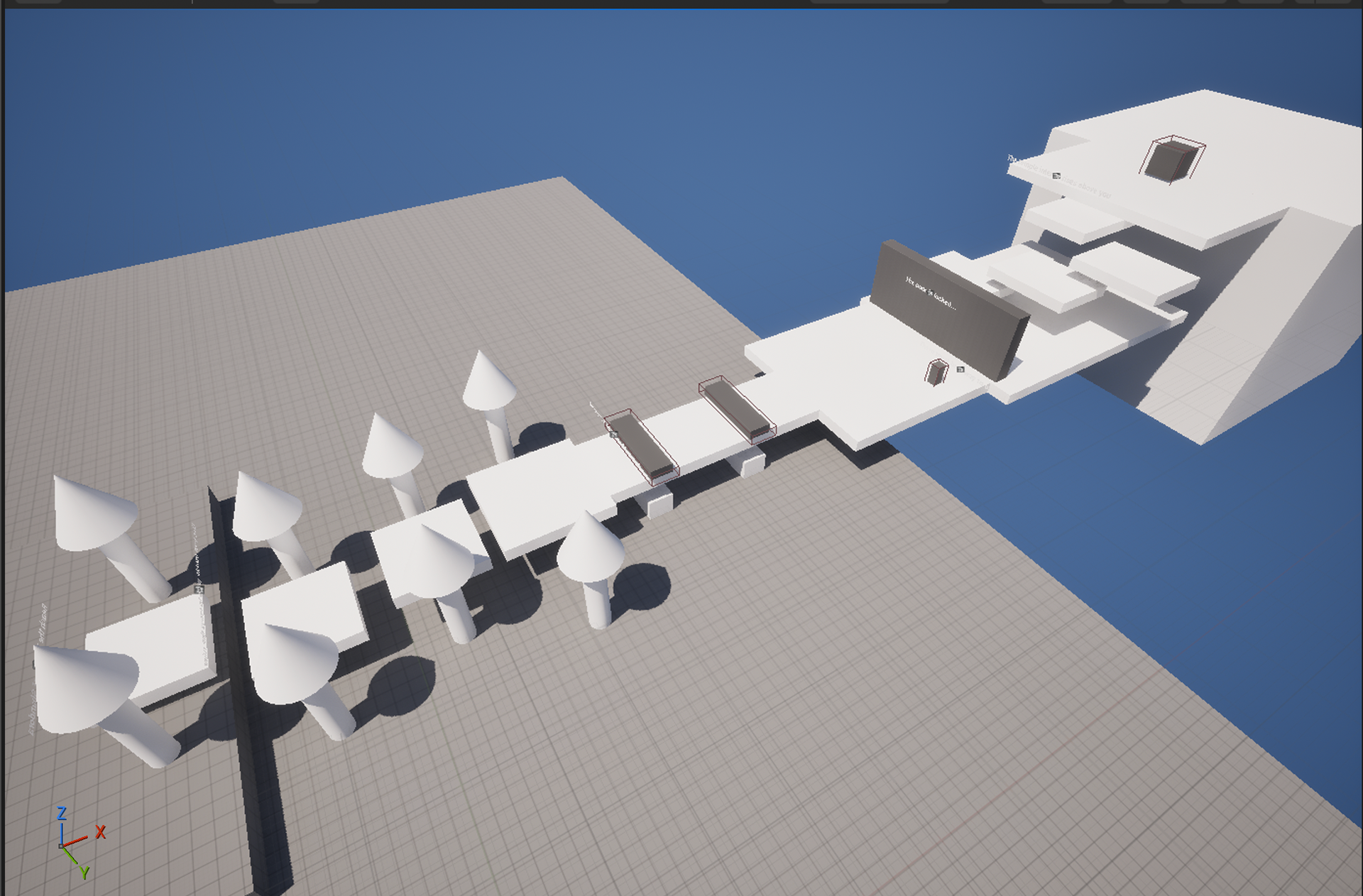
The level uses natural leading lines and architectural framing to guide the player without intrusive markers.
> Paths are revealed through contrast in lighting and openness
> Structural elements (arches, doorways) frame progression points
> Foliage density subtly blocks or reveals routes
>>>>>>>>>>>>>>>>>>>>>>>>>>>>>>>>>>>>>>>>>>>>>>>>>>>>>>>>>>>>>>>>>>>>>>>>>>>>>
Spatial Design & Composition
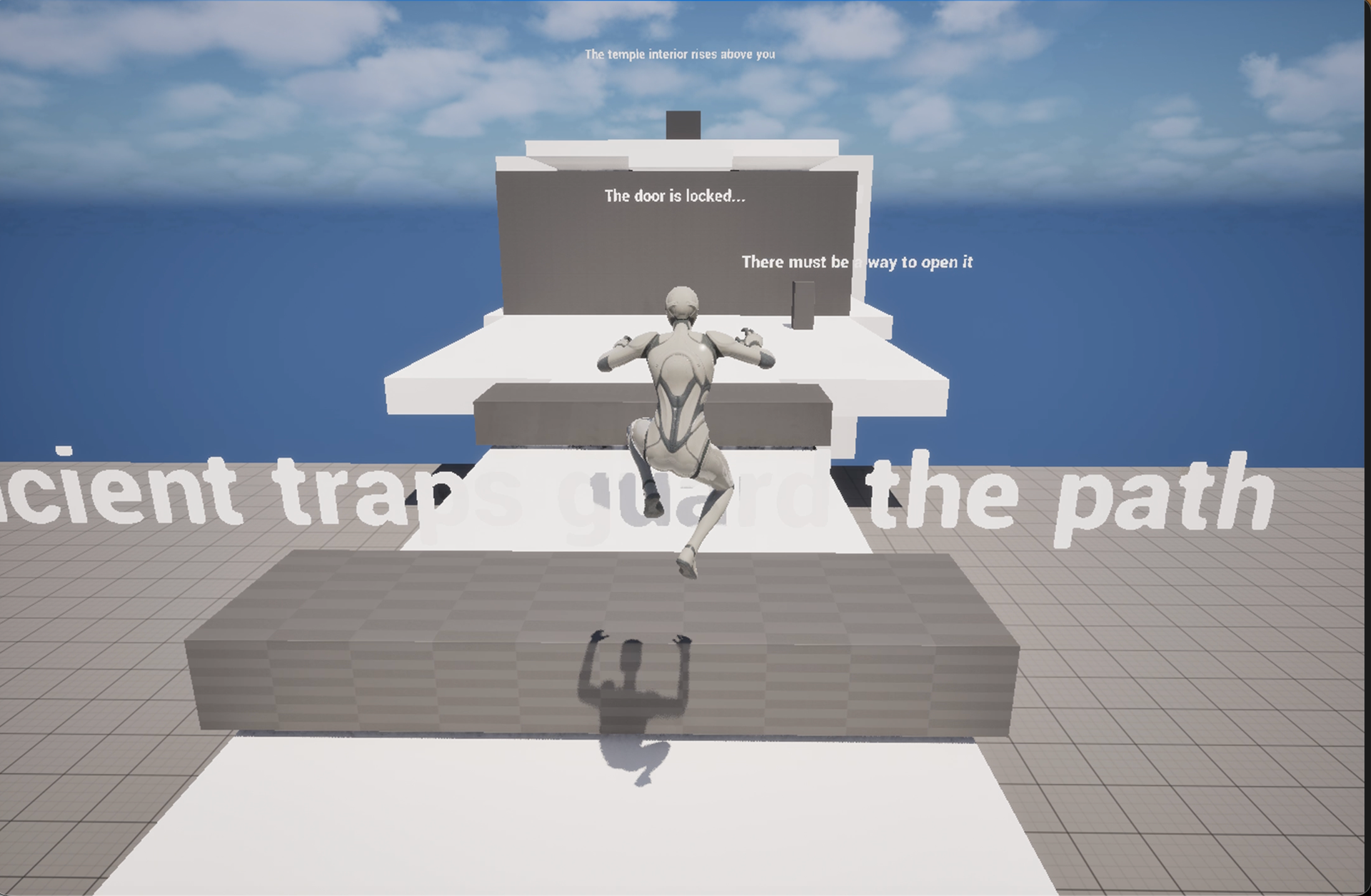
The environment is designed with layered spaces and vertical variation:
> Elevated platforms create visual interest and navigation options
> Open areas contrast with tighter corridors to control pacing
> Landmarks anchor player orientation within the space
>>>>>>>>>>>>>>>>>>>>>>>>>>>>>>>>>>>>>>>>>>>>>>>>>>>>>>>>>>>>>>>>>>>>>>>>>>>>>
Player Flow & Pacing
The experience is structured to guide emotional and gameplay pacing:
> Start – Orientation
Open, readable space introduces the environment
> Mid – Exploration
Increased freedom with multiple paths and discovery moments
> End – Focused Progression
Narrower spaces guide the player toward a clear objective
This creates a rhythm of: Curiosity → Exploration → Clarity
>>>>>>>>>>>>>>>>>>>>>>>>>>>>>>>>>>>>>>>>>>>>>>>>>>>>>>>>>>>>>>>>>>>>>>>>>>>>>
Iteration & Development
Development Focus:
> Improving path readability in open areas
> Refining layout to reduce player confusion
> Strengthening environmental cues for navigation
>>>>>>>>>>>>>>>>>>>>>>>>>>>>>>>>>>>>>>>>>>>>>>>>>>>>>>>>>>>>>>>>>>>>>>>>>>>>>
Next Steps
> Enhance lighting contrast to better highlight critical paths
> Add environmental storytelling elements
> Improve visual hierarchy between main and secondary routes
This project is part of my ongoing development in designing gameplay-driven environments.
>>>>>>>>>>>>>>>>>>>>>>>>>>>>>>>>>>>>>>>>>>>>>>>>>>>>>>>>>>>>>>>>>>>>>>>>>>>>>
Tools Used
> Unreal Engine 5
> Level Blockout & Environment Assembly
> Lighting for gameplay guidance